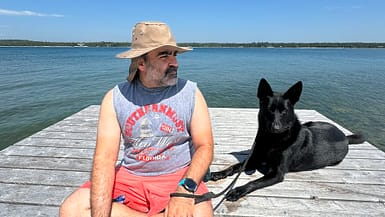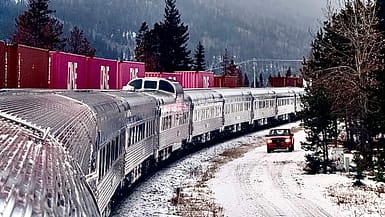
Nova Scotia had been calling us for a while — and when we finally travelled, it was October. The fall. We spent a week driving through Nova Scotia’s most stunning landscapes, from the iconic Peggy’s Point Lighthouse at sunset to the jaw-dropping autumn colours of Cape Breton’s Cabot Trail.
This one’s all about Cape Breton — the Cabot Trail, the hikes, the food, and the autumn colours that made this trip unforgettable.
A Quick Stop: Halifax & the South Shore
Peggy’s Point Lighthouse


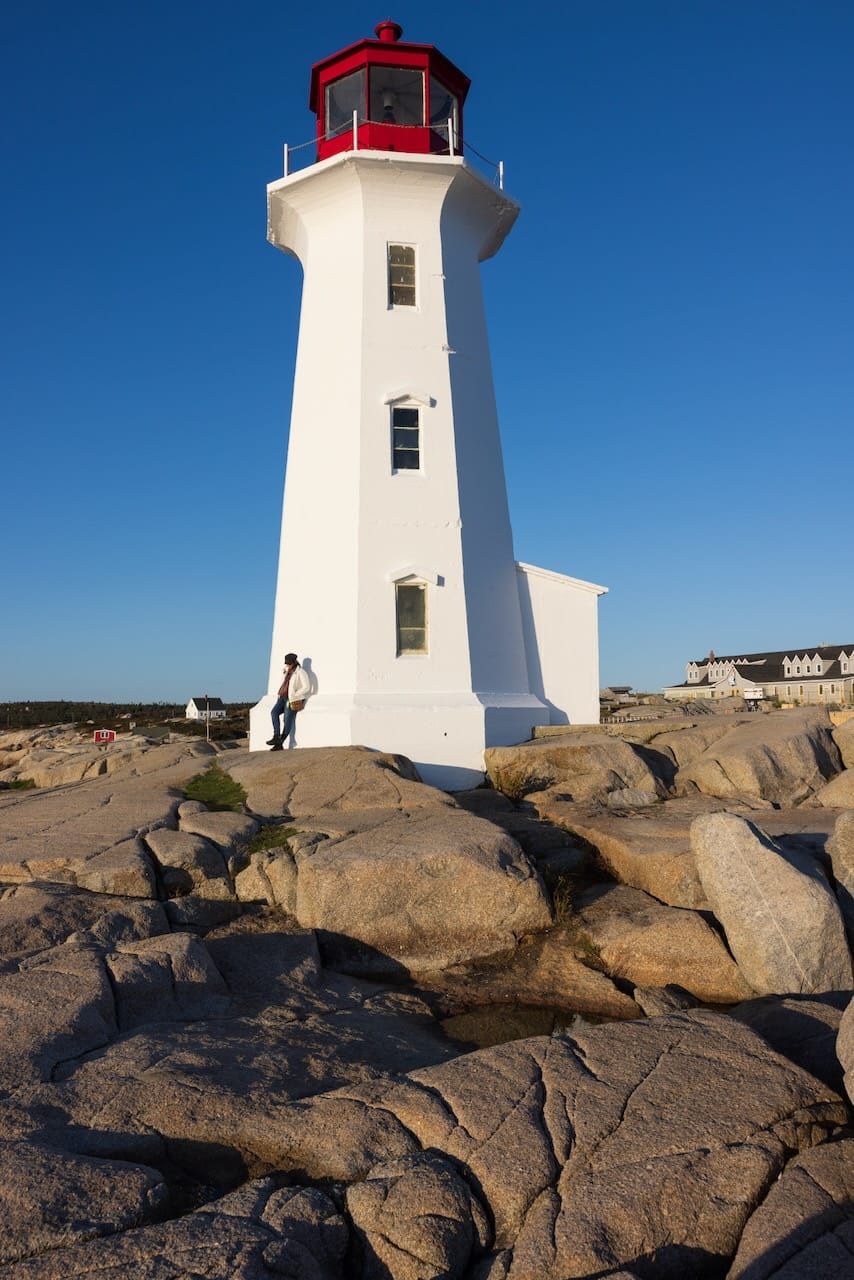
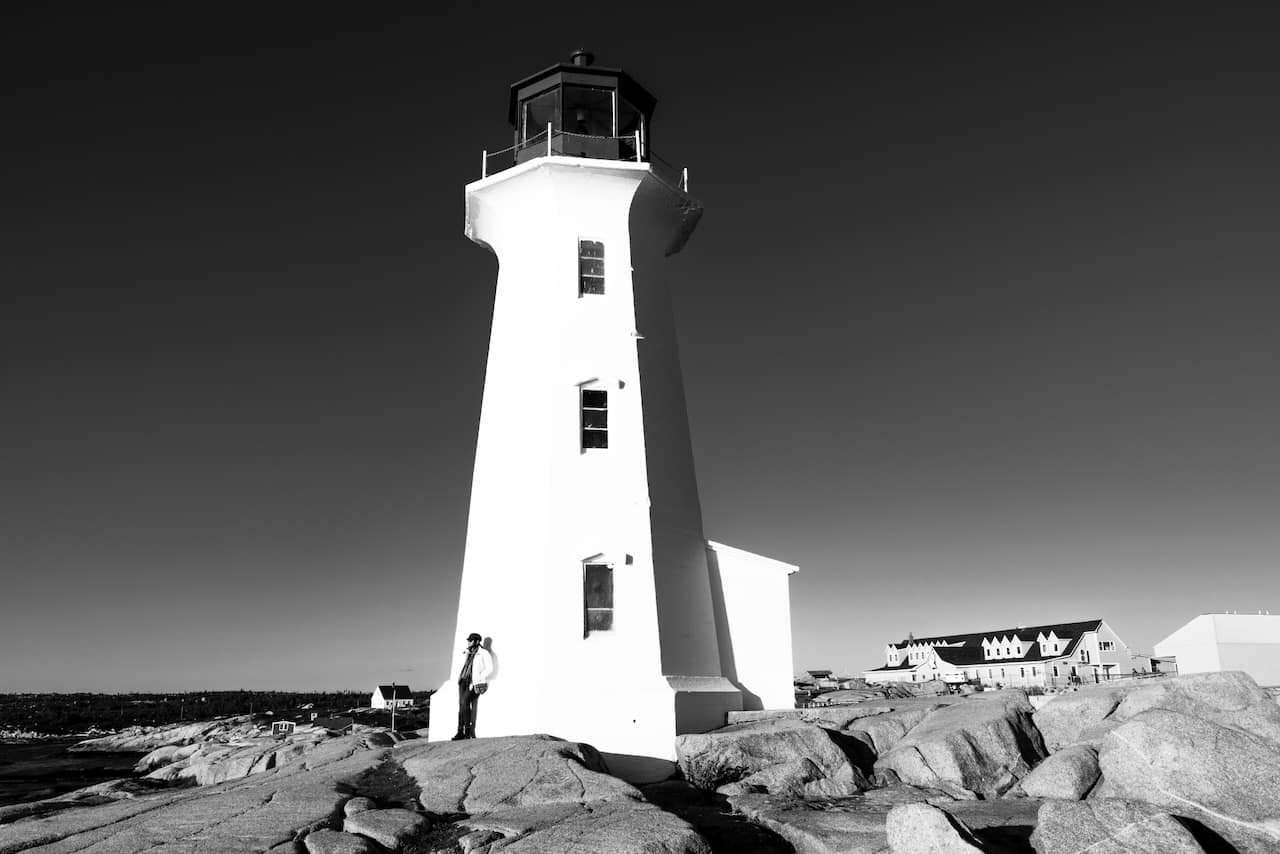
Our first stop — and what a way to start. Peggy’s Cove at sunset is genuinely breathtaking. The light hitting the rocks, the Atlantic crashing below, and that little lighthouse standing there like it’s been waiting for you.
Pro tip: If you want a photo of the lighthouse without a crowd of tourists in it, plan to stay a while. We spent a solid hour or two just waiting and soaking it in before we got our moment. It’s worth the patience — and honestly, with a sunset like that, you won’t mind the wait.
Lunenburg


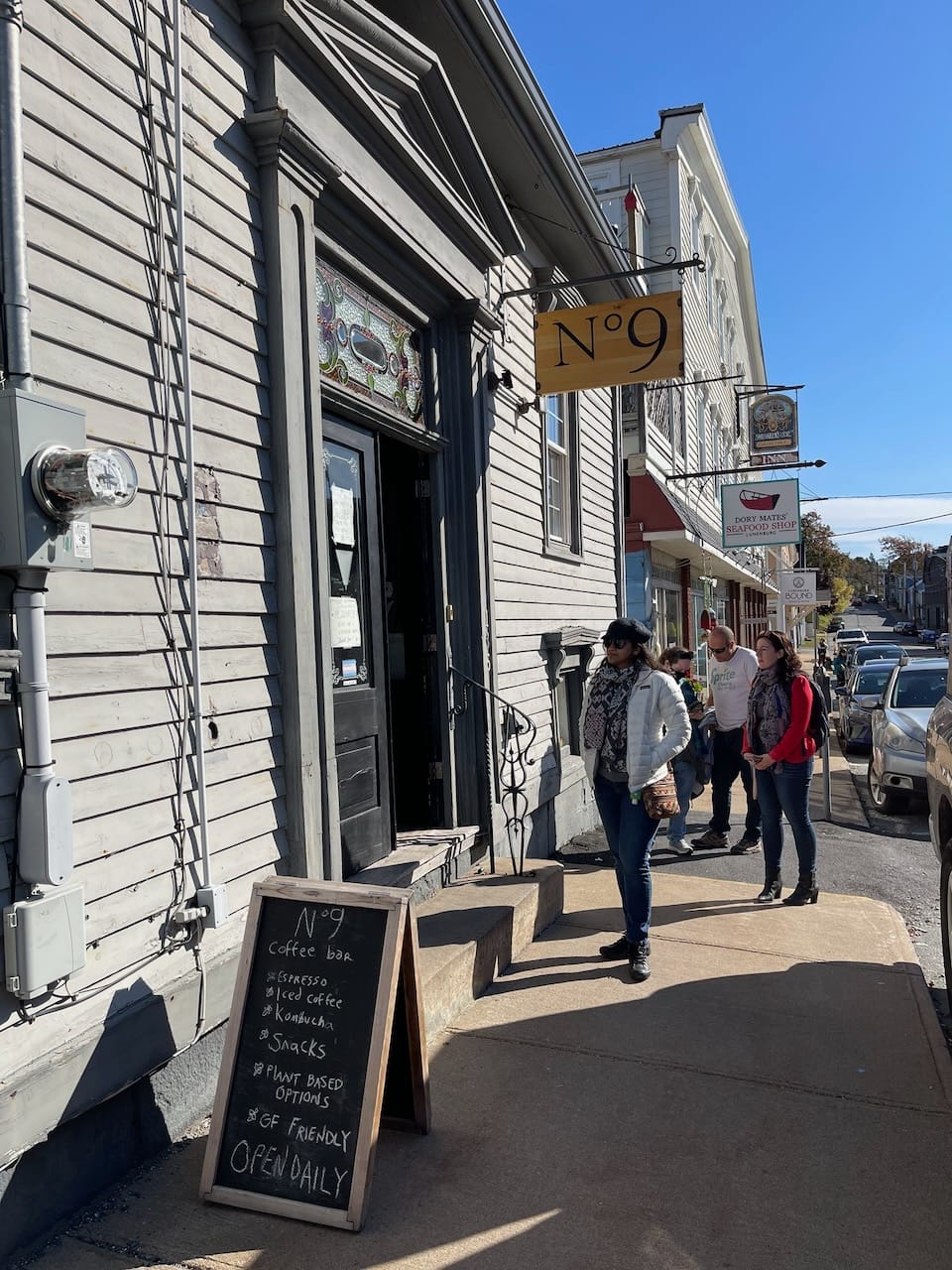
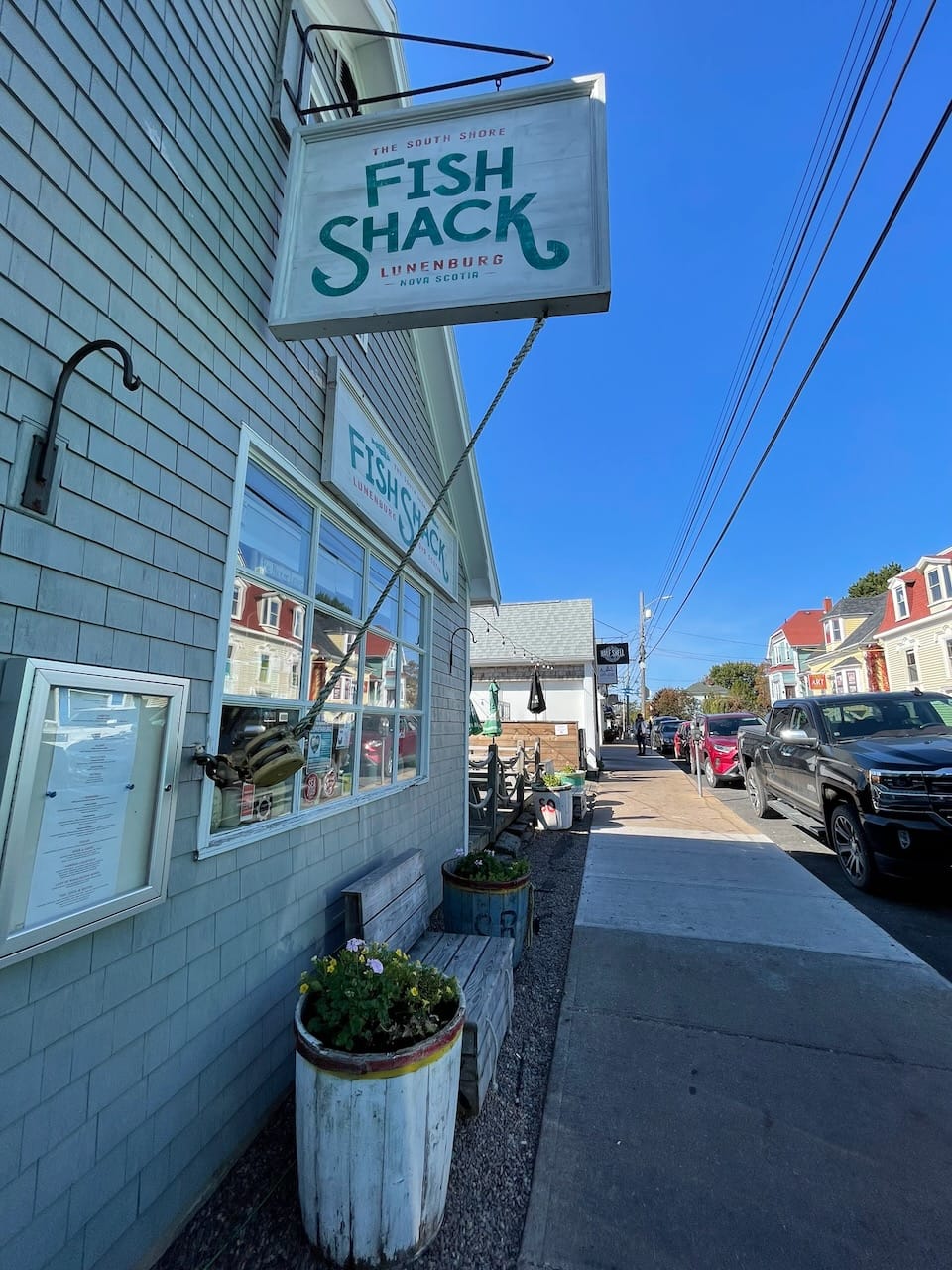
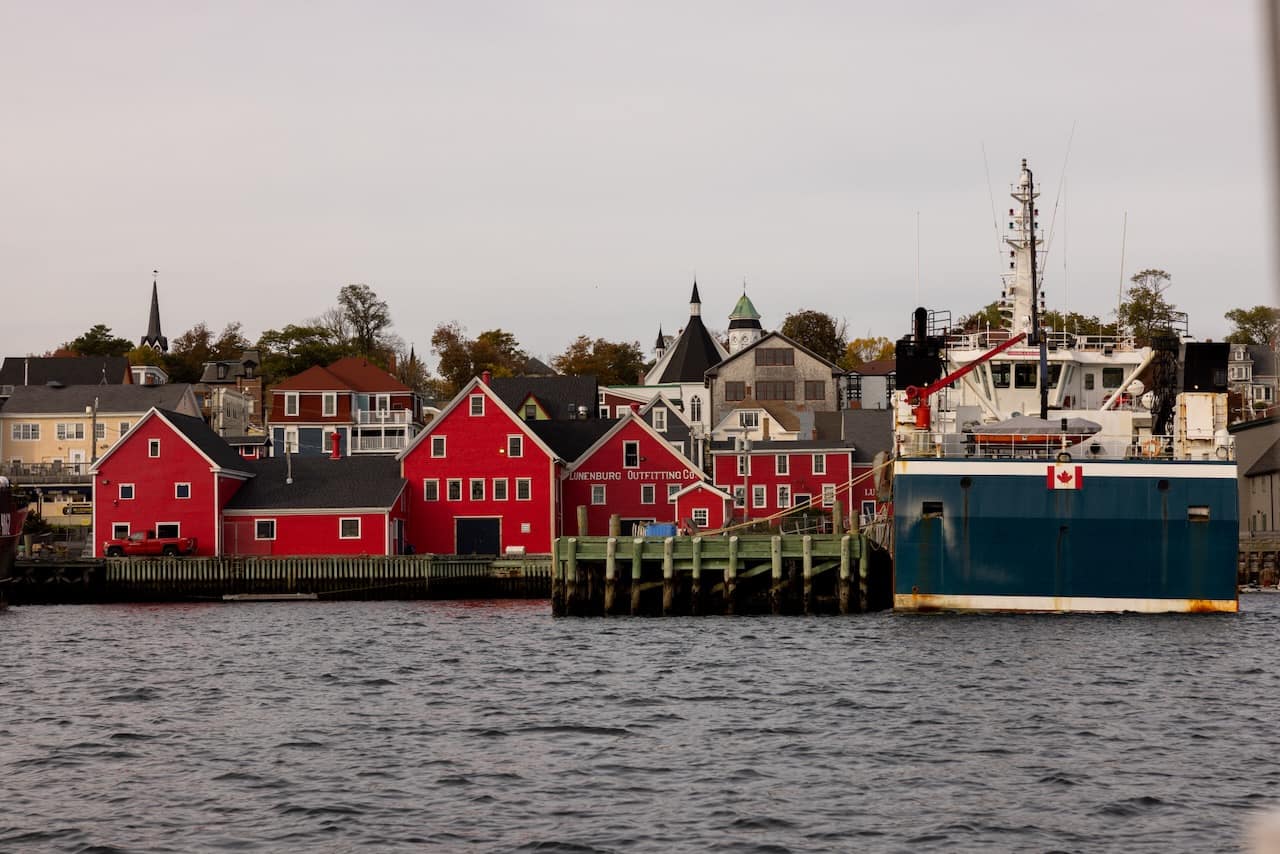
A quick morning in Lunenburg — colourful waterfront, UNESCO vibes, and a stop at No 9 Coffee Bar for coffee, mocha, and their incredible tahini bar and pecan peanut butter bar. All yummy.
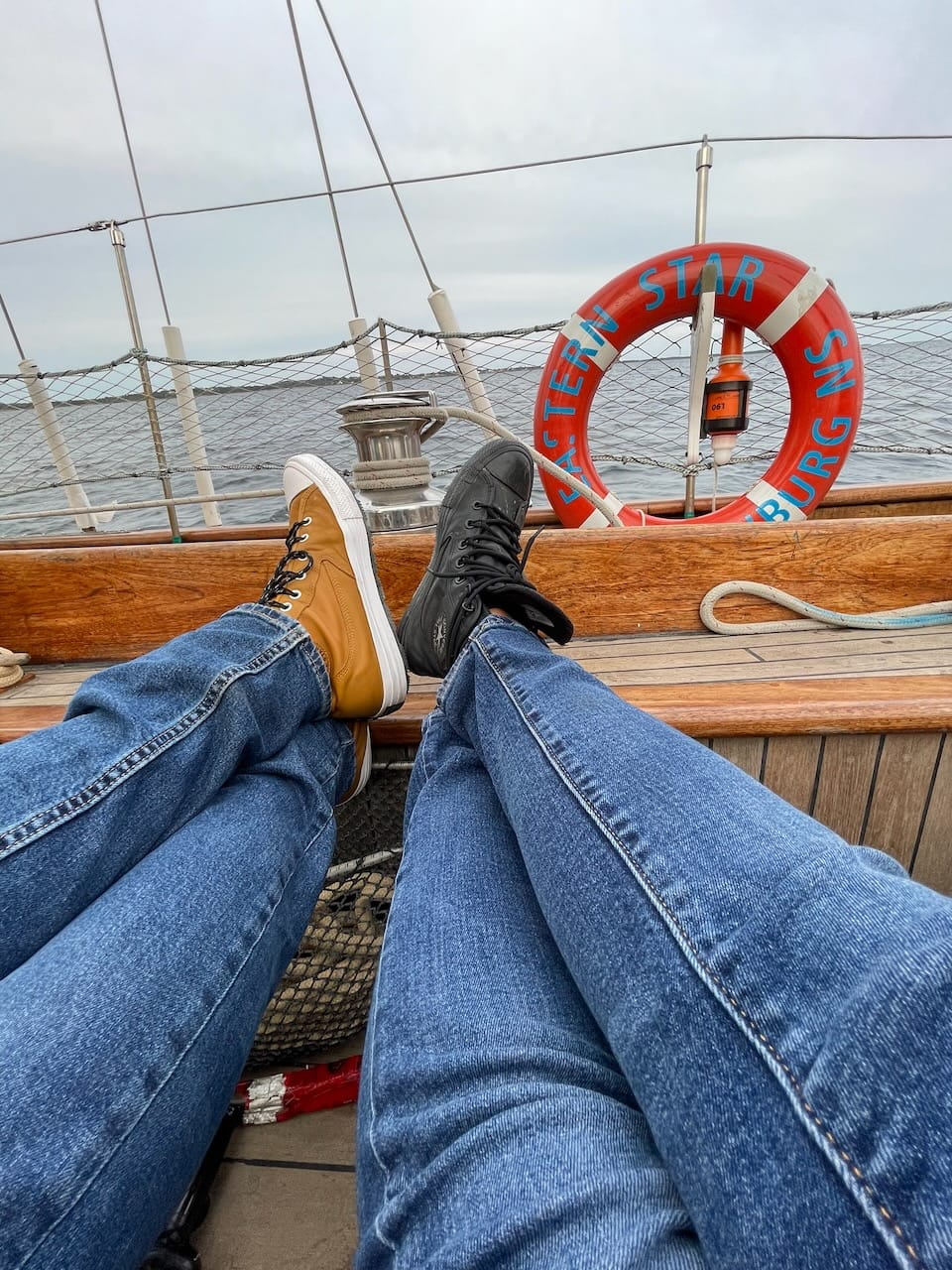
We also hopped on a sunset sailing with the Eastern Star from the Lunenburg Waterfront ($90). The sunset itself wasn’t the most spectacular, but the sailing was a blast.
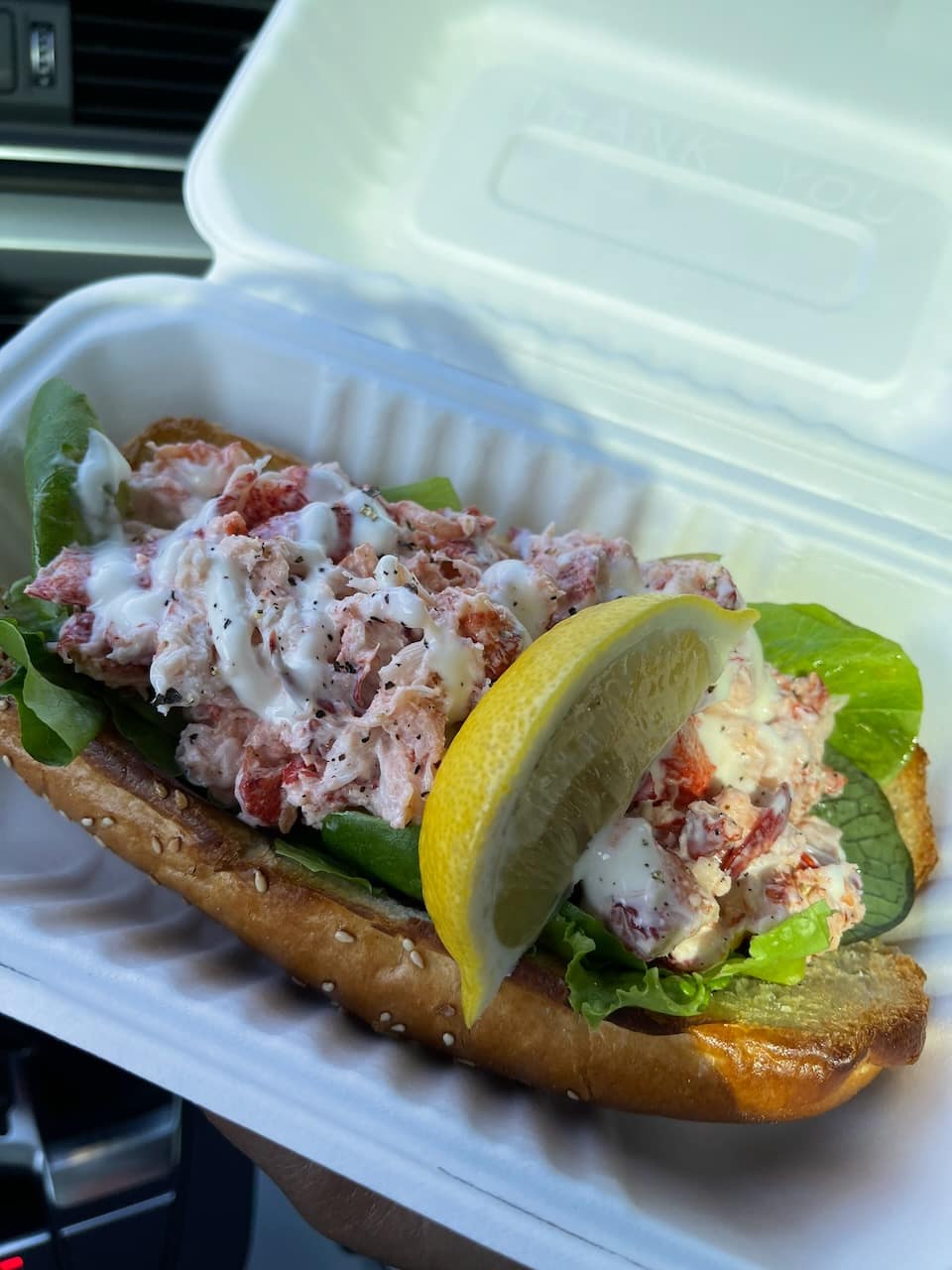
And before heading back to Halifax — lobster rolls at the Rose Bay General Store. Simple, fresh, and absolutely delicious at $25 for two.
The Bicycle Thief — Halifax
Dinner on our last night in Halifax was at The Bicycle Thief on the waterfront. The seafood stew with garlic bread was AMAZING — one of those dishes you close your eyes for. The seafood lasagna was okay, but that stew? Pure yummness. Paired with vanilla crème brûlée and berry cheesecake for dessert. About $170 for two.
Cape Breton: An Ocean of Orange
This is why we came.
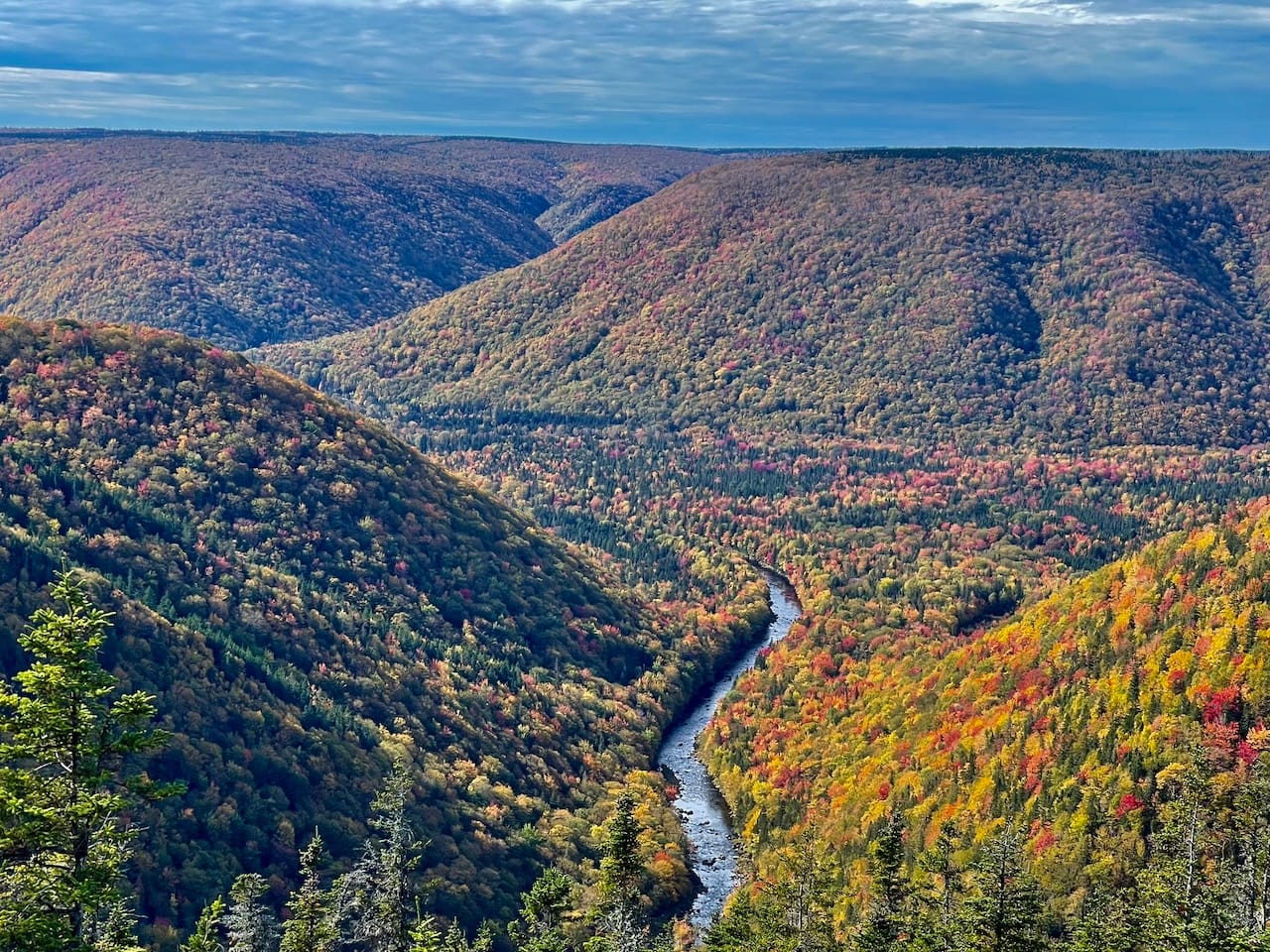
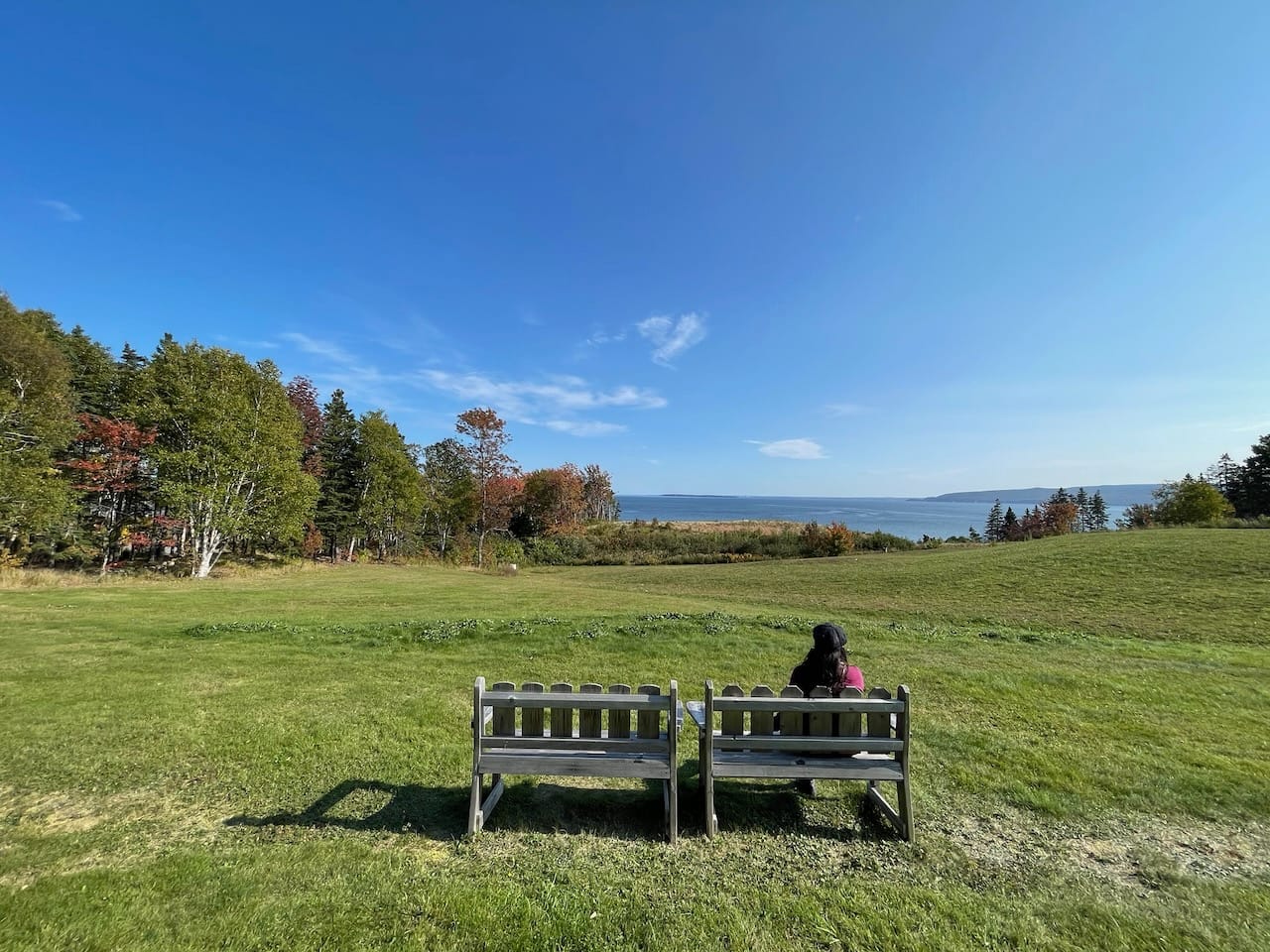
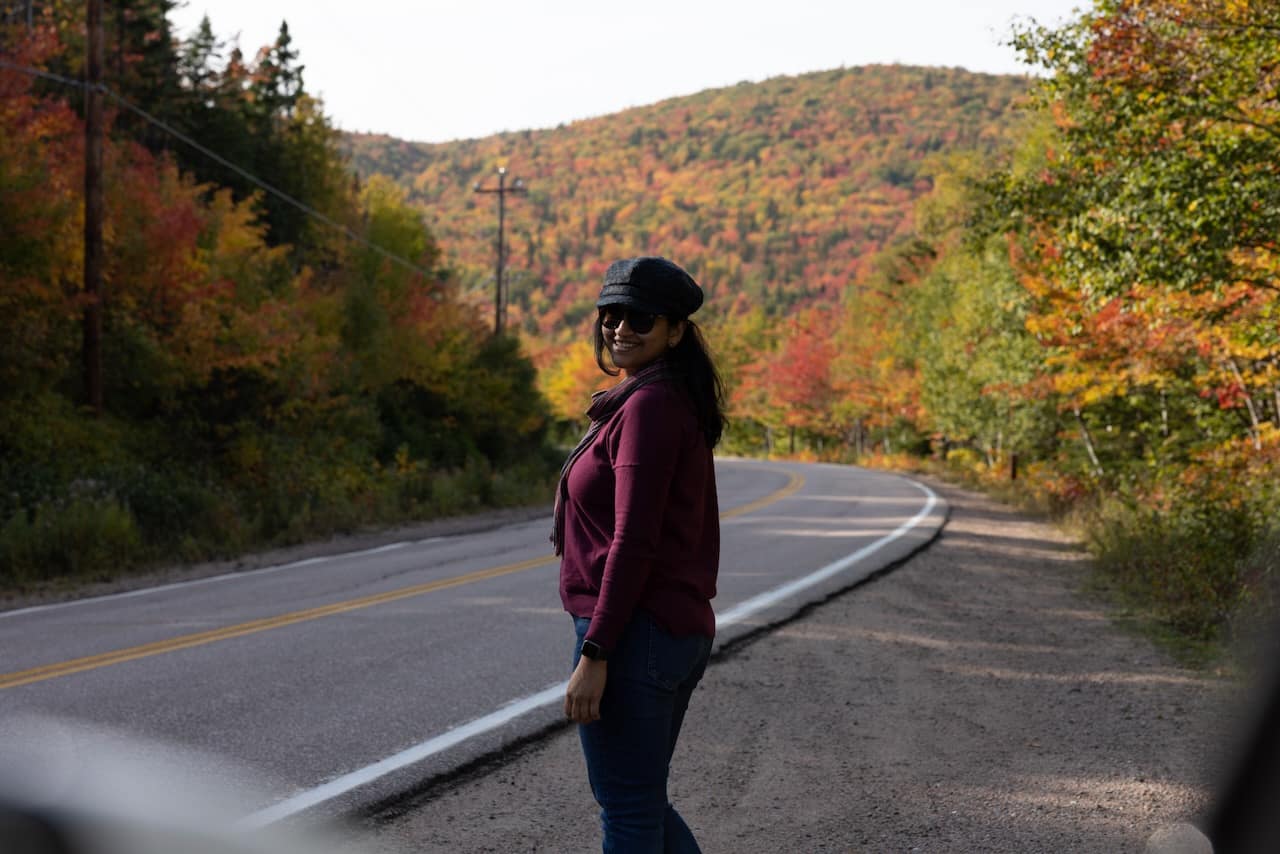
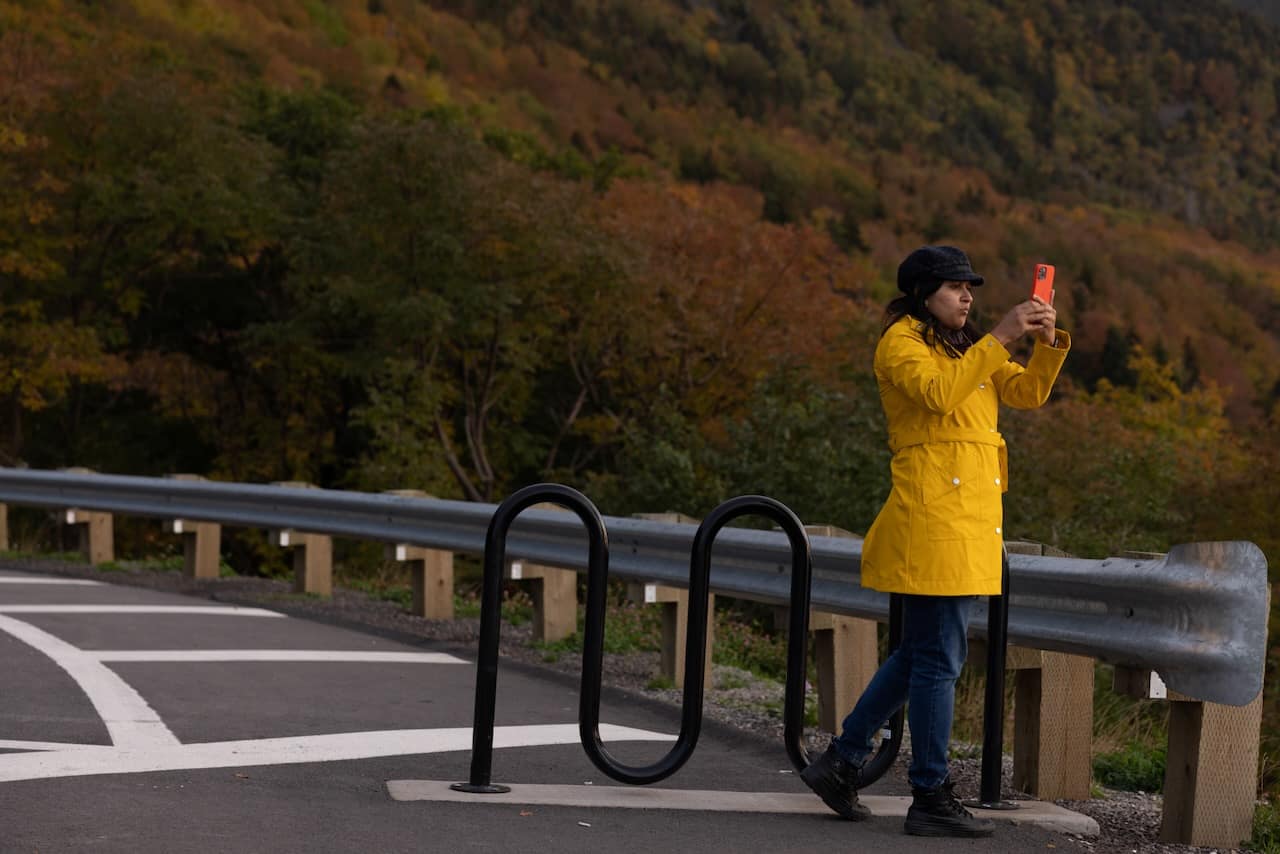
We drove from Halifax up to Cape Breton Island and spent four days exploring the Cabot Trail — a 300 km loop of winding coastal roads, highland trails, and some of the most vivid autumn colours we’ve ever seen.



Timing Is Everything: Shoulder Season Magic
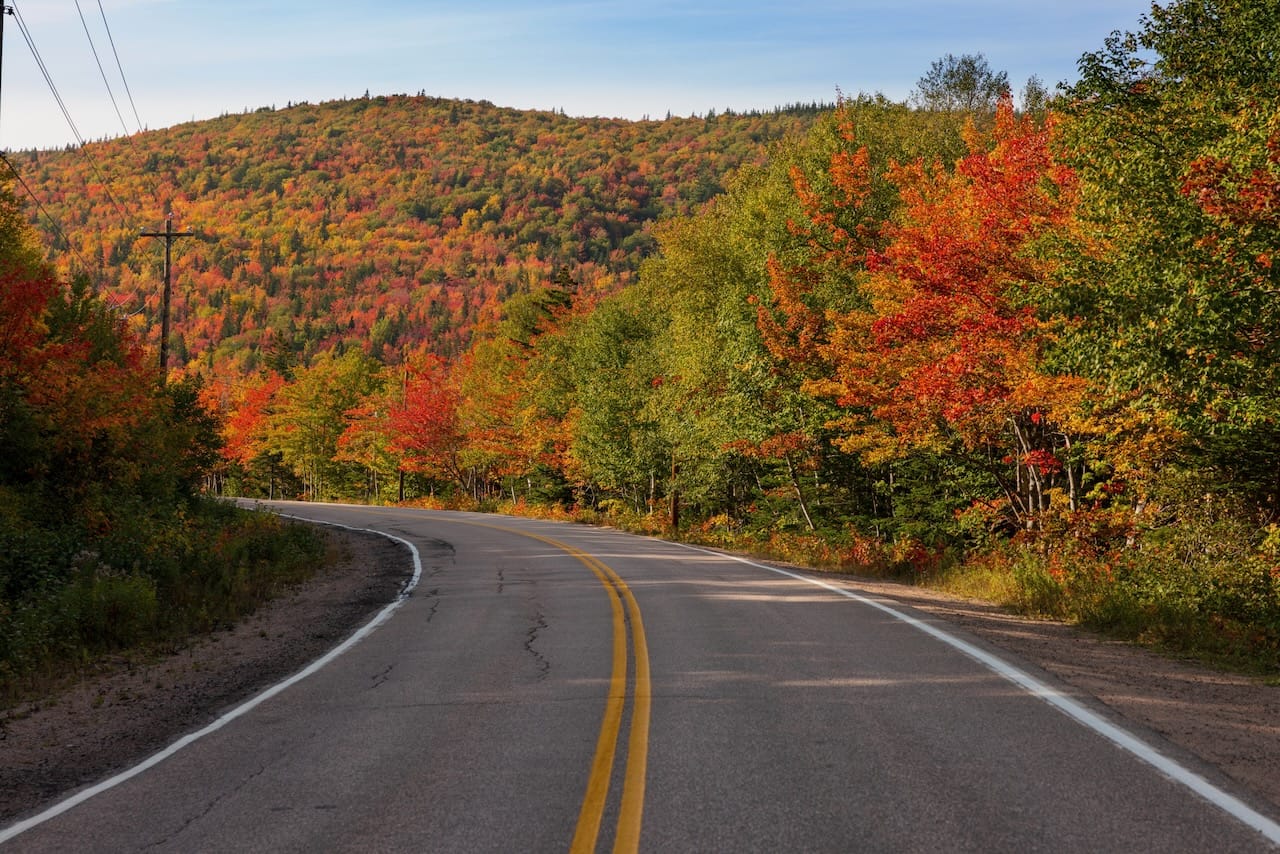
Here’s a secret we stumbled onto: we went a week or two before peak foliage season, and it was perfect. The colours were already magnificent — blazing oranges, deep reds, golden yellows everywhere you looked. But because it was shoulder season, there was hardly anyone there. No fighting for parking at trailheads. No lineups at lookouts. Just us and the mountains.
If you’re planning a Cape Breton fall trip, don’t stress about hitting the exact peak week. A week or two before is honestly ideal.
Driving the Cabot Trail
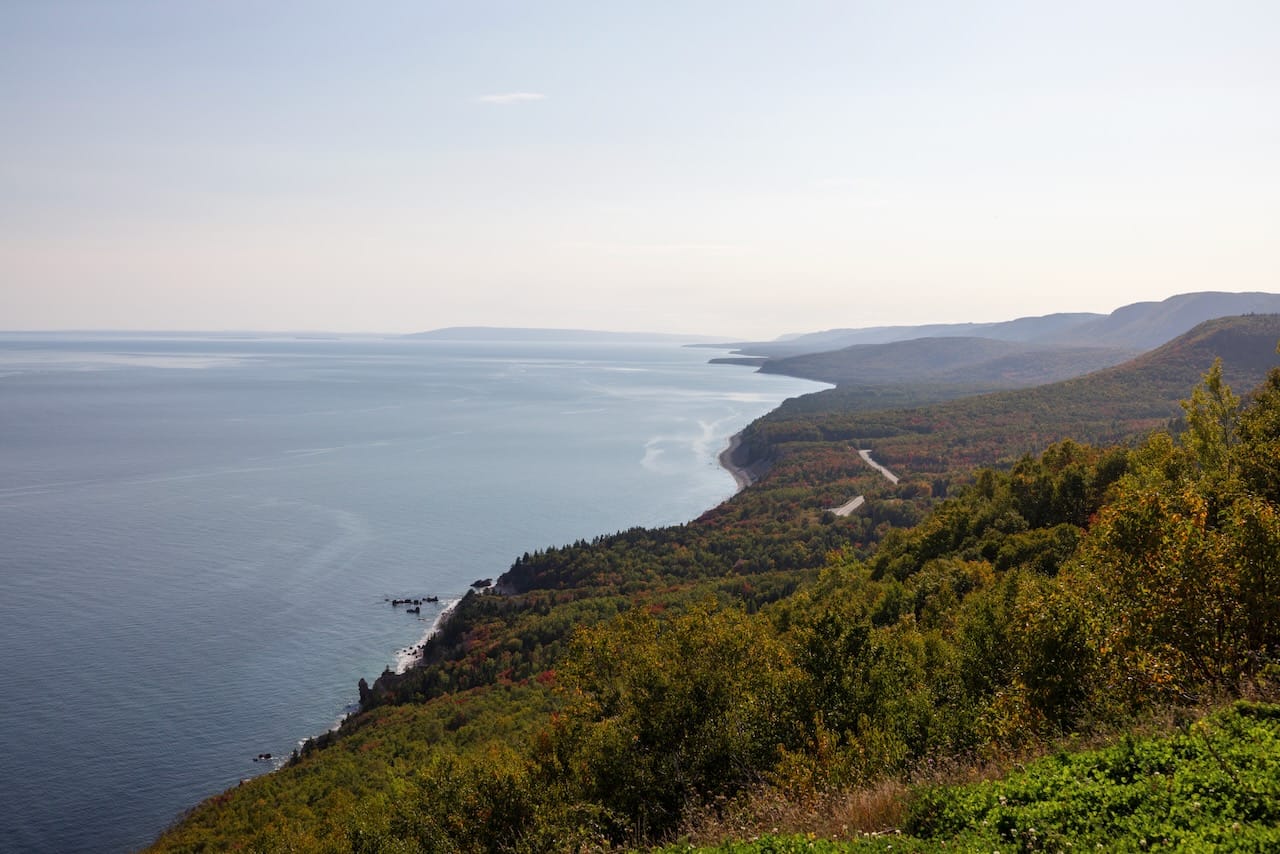
The Cabot Trail itself is the star of the show. Every bend in the road reveals another valley of orange, another ocean vista, another “pull over RIGHT NOW” moment. The road climbs up through Cape Breton Highlands National Park, hugging cliffsides with the Atlantic far below and the mountains ablaze in colour above.
We drove the full loop and it was one of the best driving days we’ve had — anywhere in the world. The stretch around MacKenzie Mountain where the road winds between the mountains and the ocean is particularly jaw-dropping.
Skyline Trail



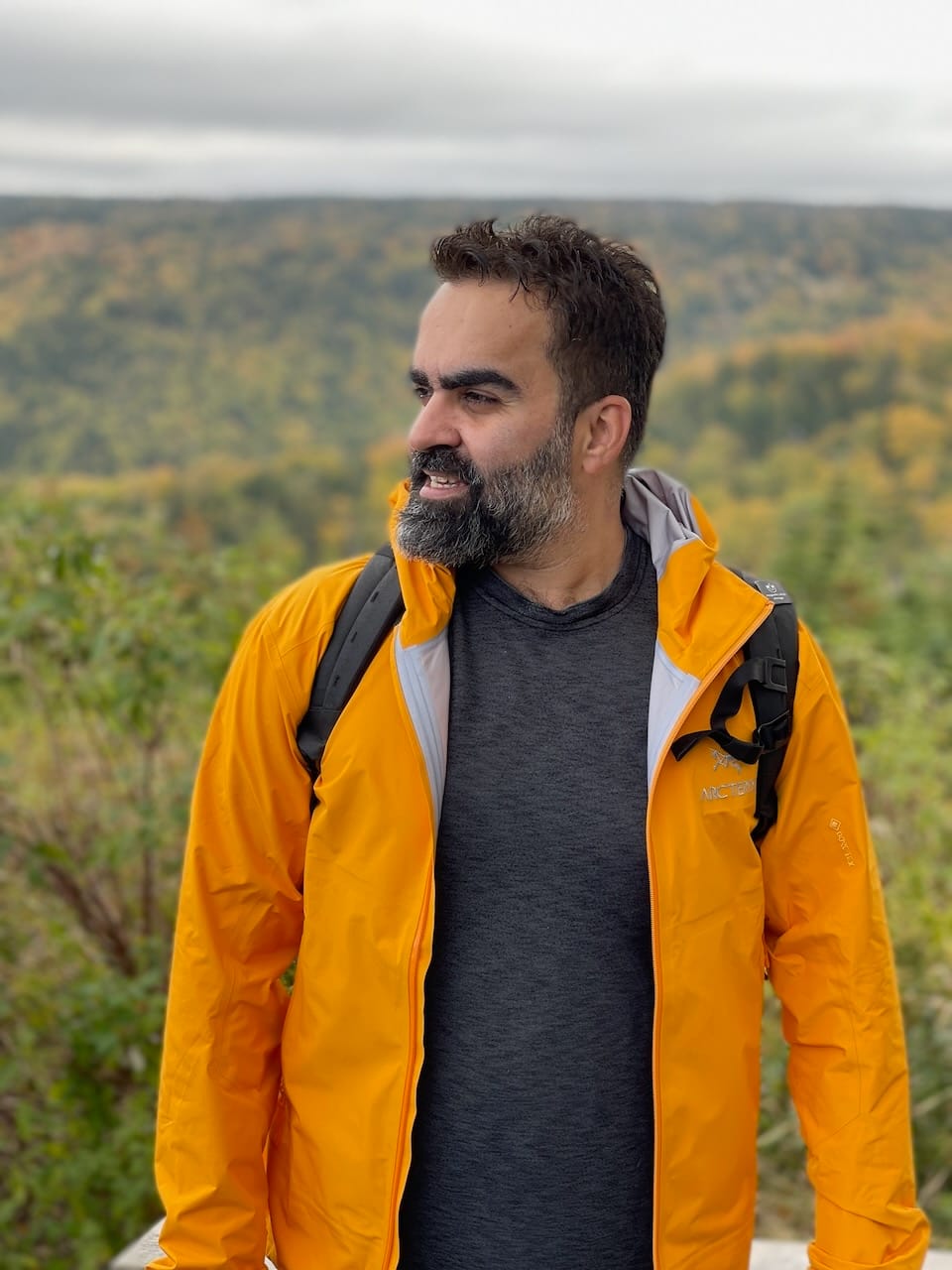
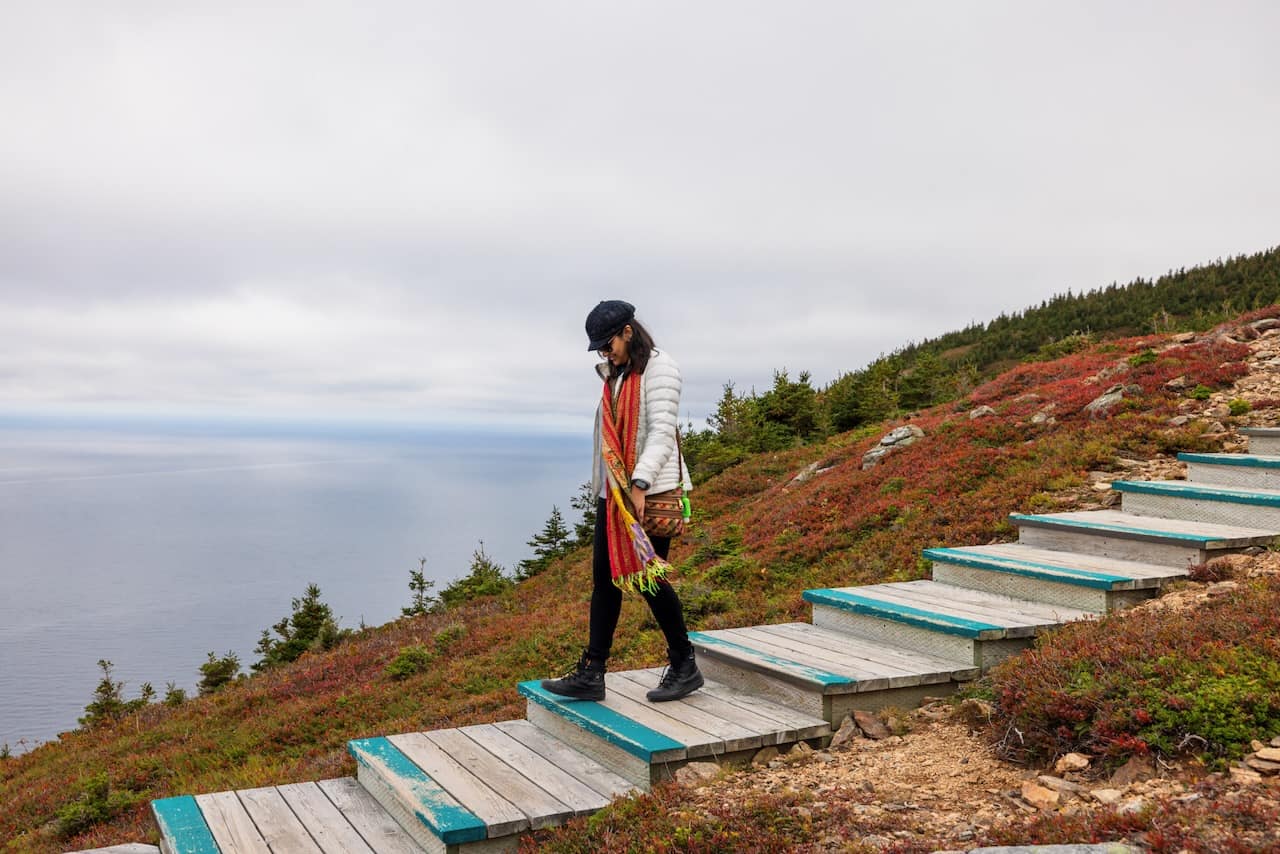
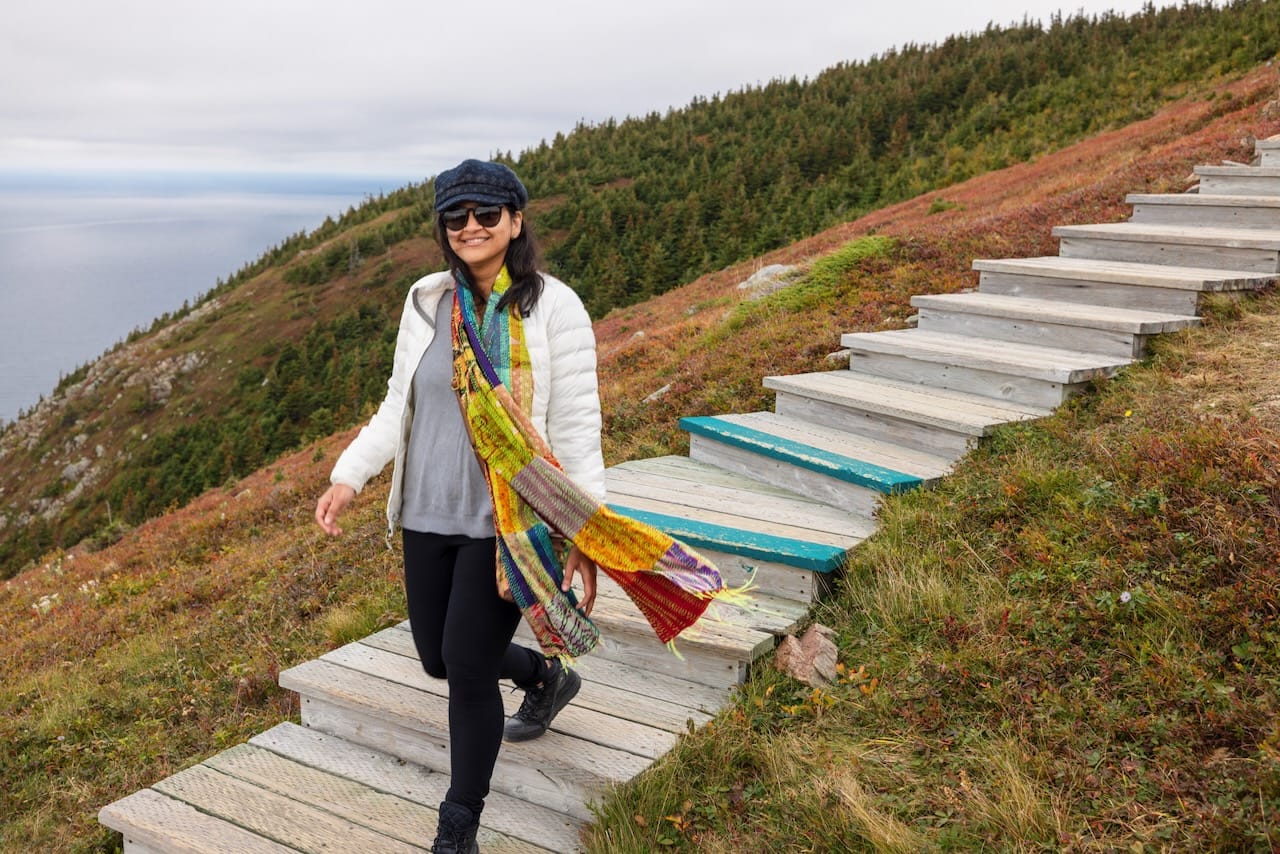
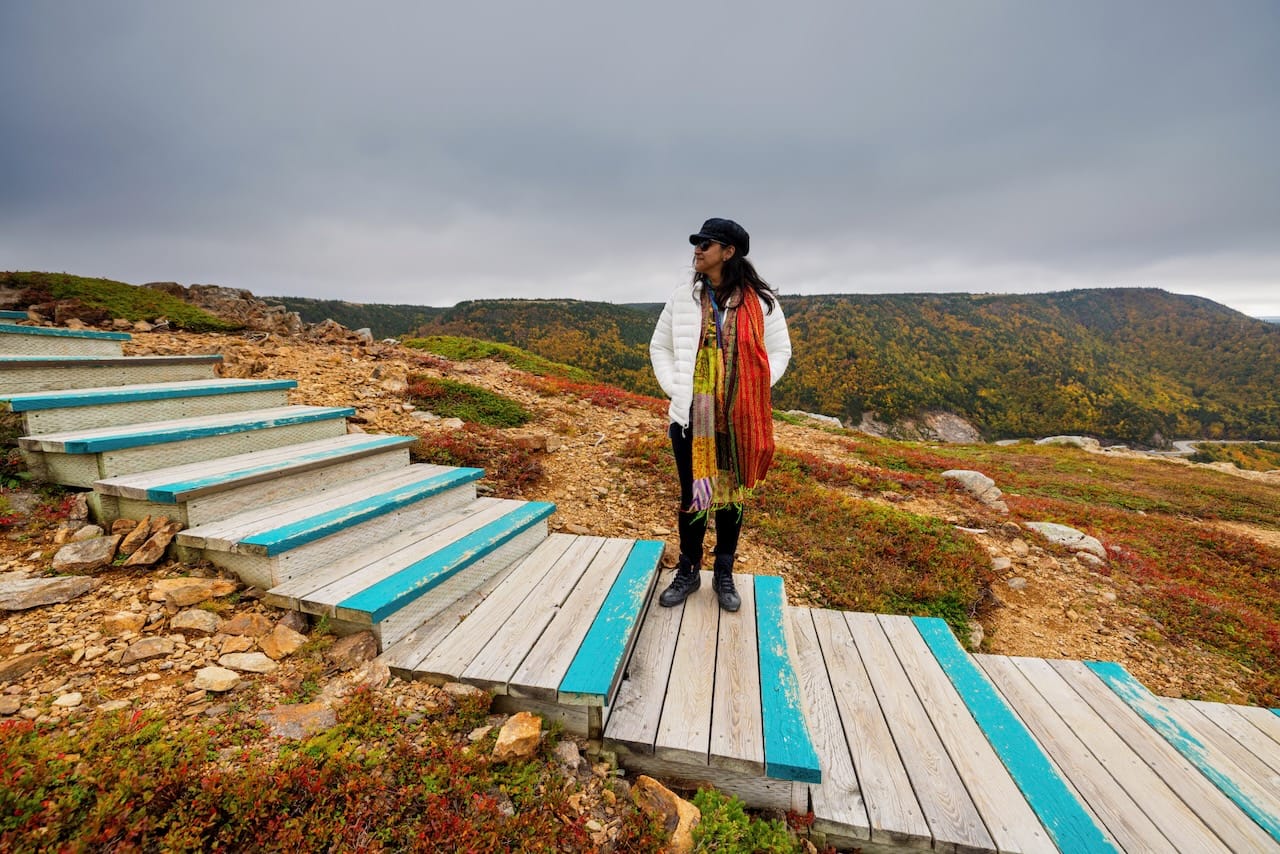
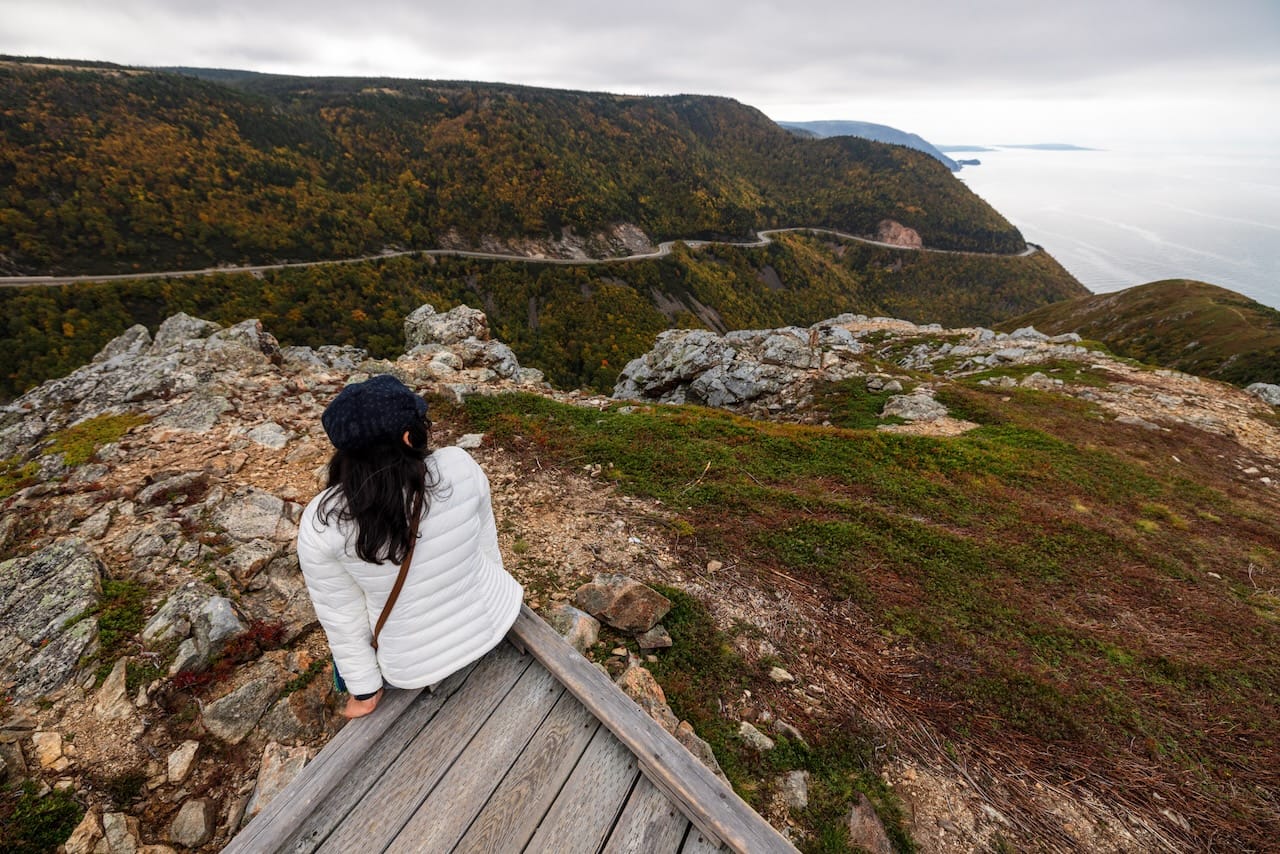
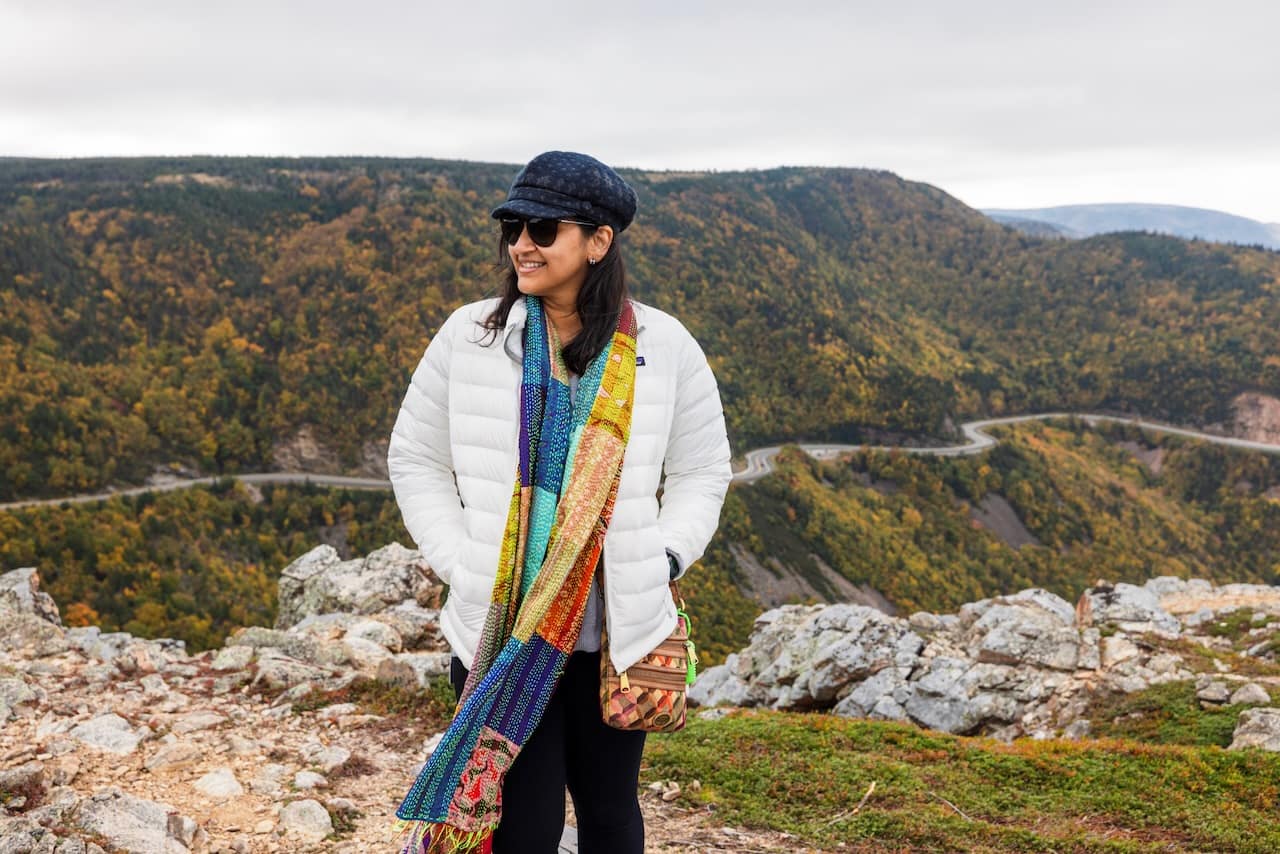
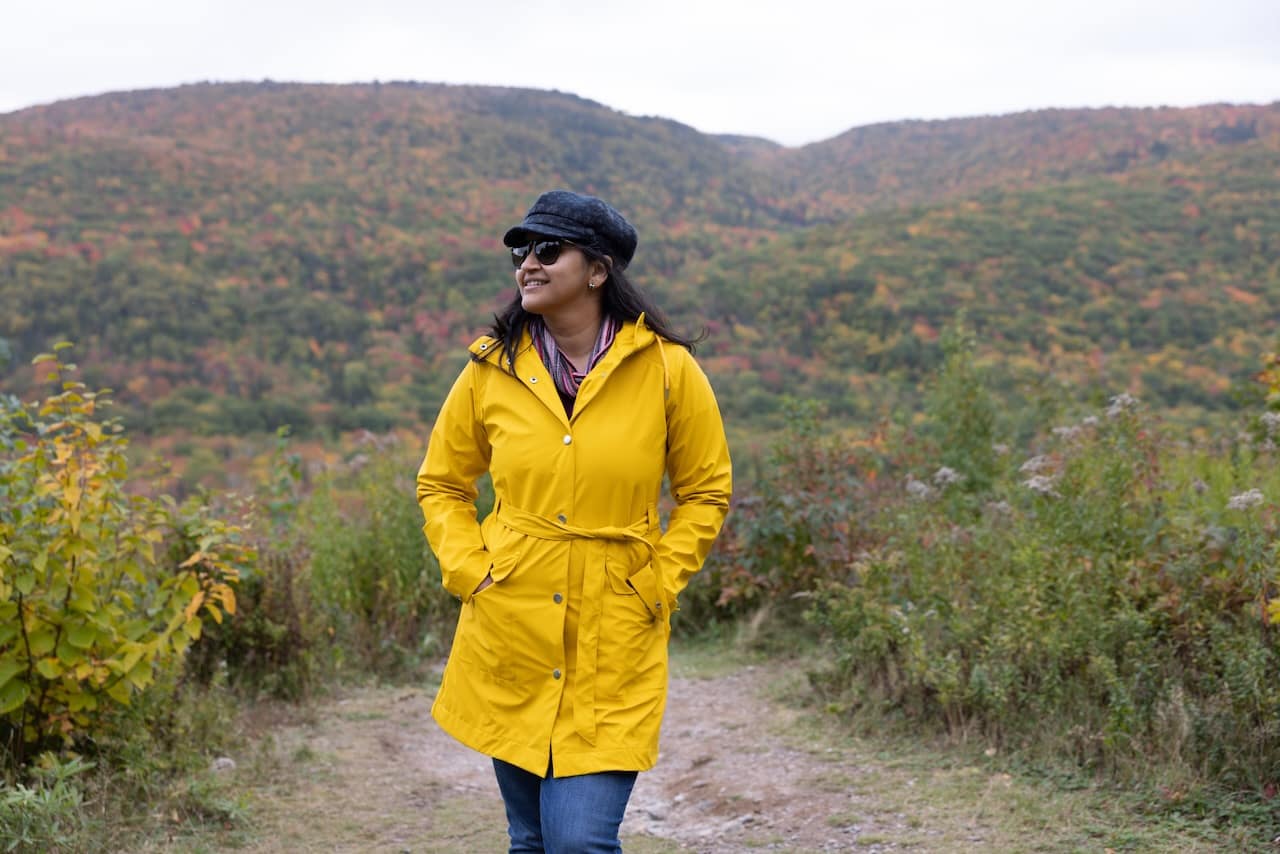
The most famous hike on the Cabot Trail, and for good reason. The Skyline Trail takes you along a boardwalk through the highlands, with the trail ending at a dramatic clifftop lookout over the ocean and the winding road far below.
The views are massive — you can see for miles in every direction. On a clear day (which we had!), it feels like you’re standing at the edge of the world. The boardwalk stairs leading down to the viewpoint are iconic, and the whole hike is manageable at about 7-8 km return.
Gypsum Mine Lake
A quieter, less crowded hike near Chéticamp. The trail leads to an abandoned gypsum mine turned emerald-green lake, surrounded by white cliffs and autumn-coloured trees reflected perfectly in the still water. It’s surreal — like stumbling onto a hidden gem that the crowds haven’t found yet.
Cape Clear
This one’s for the adventurers. Cape Clear is an off-road drive through rugged terrain to a remote coastal lookout. It’s bumpy, wild, and completely worth it. The kind of spot where you feel like you’ve earned the view.
Lake-O-Law Provincial Park
A peaceful stop in the Margaree Valley area. Beautiful lake setting with fall colours reflected in the water — perfect for a quiet moment after days of driving.
Where We Ate on Cape Breton


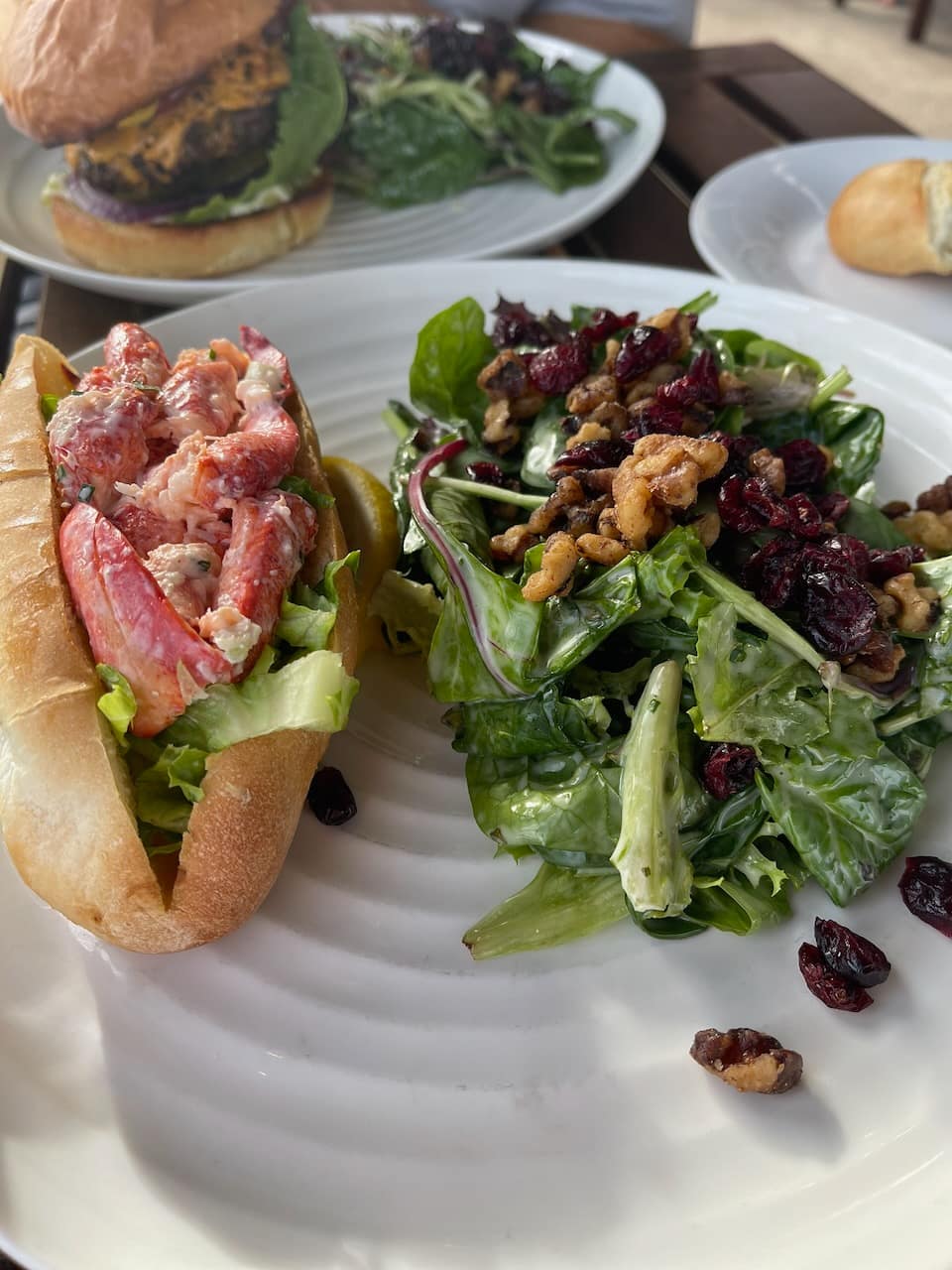
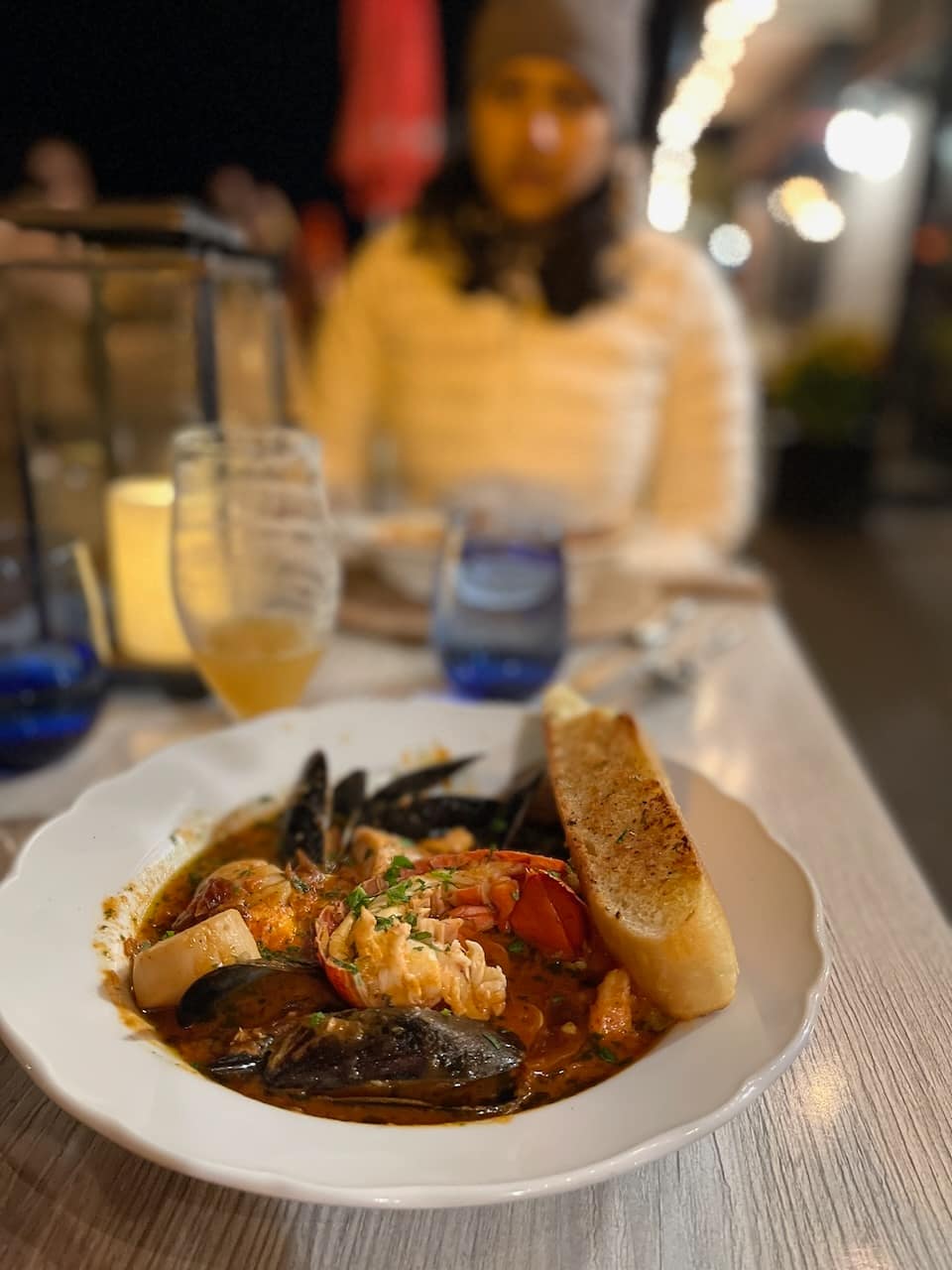
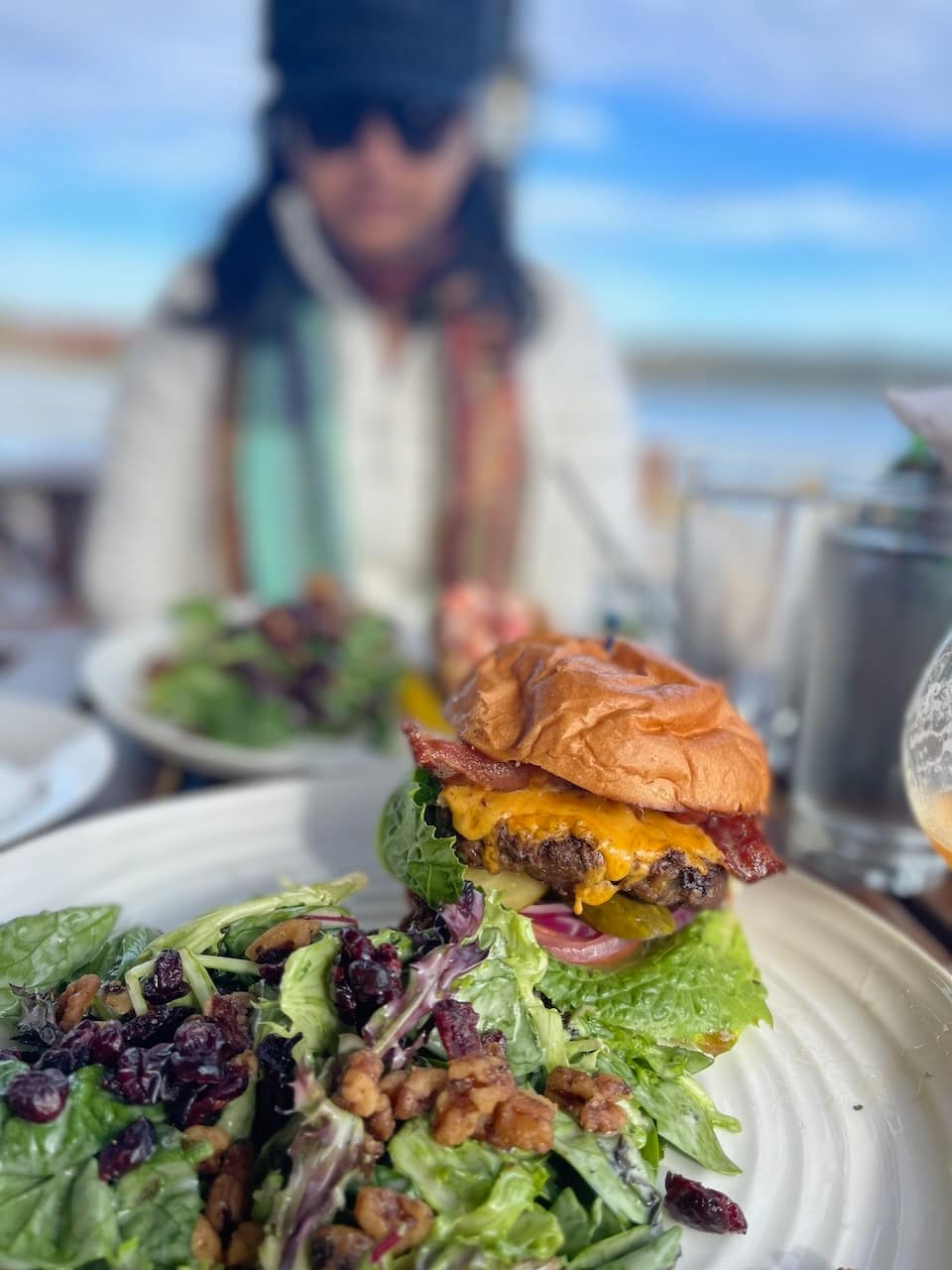
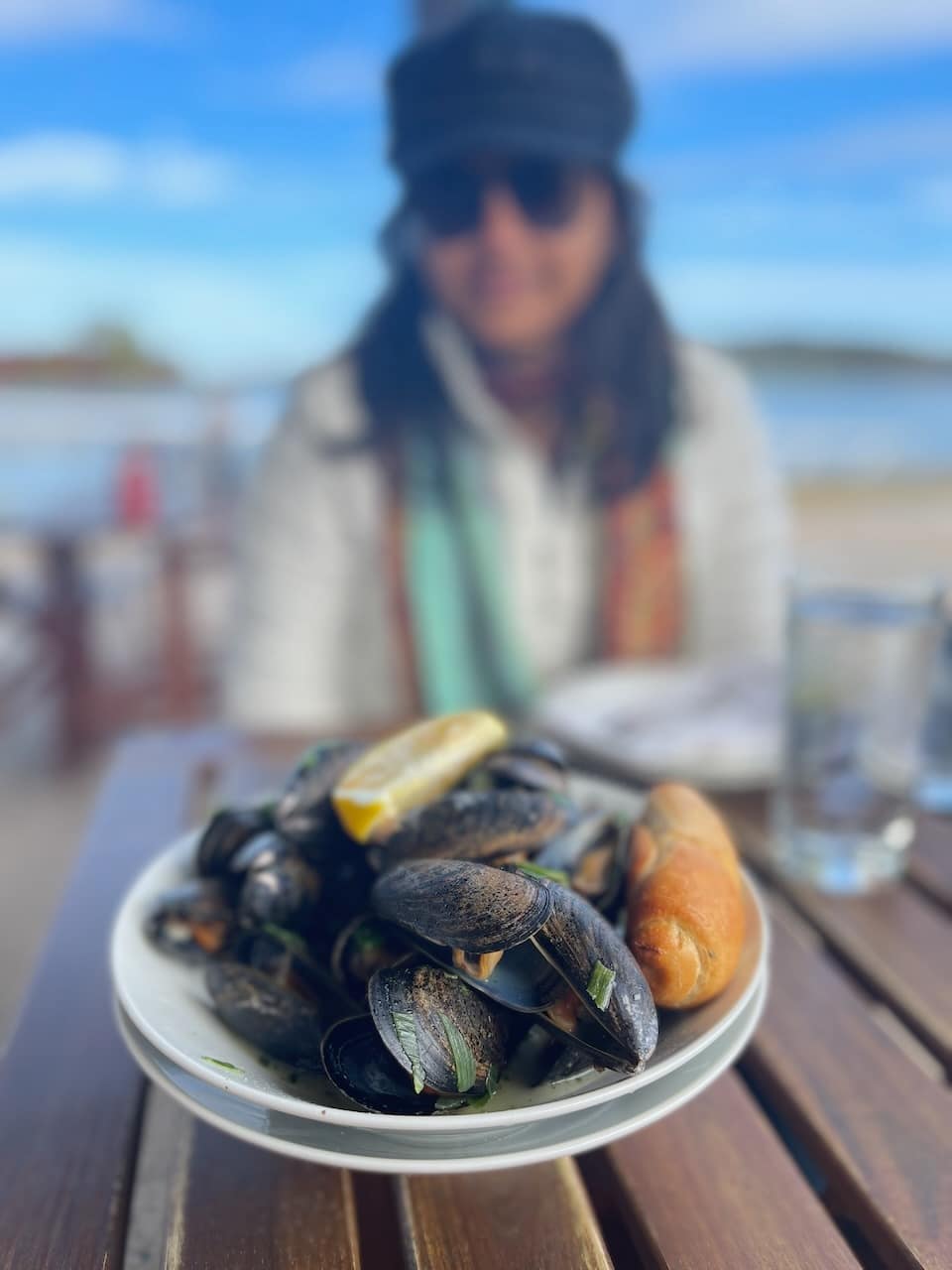

The Freight Shed — Baddeck (Our Favourite!)
We went here four times in four days. That tells you everything you need to know. This waterside bistro in Baddeck became our go-to for breakfast, lunch, and dinner. The seared haddock was excellent, the crab cakes were spot-on, and we even came back just for breakfast. At about $150 for a full meal for two, it’s very reasonable for the quality.
If you’re in Baddeck, this is the spot. Period.
Dancing Goat Cafe & Bakery — Margaree Valley
Another repeat visit — we went twice. Nestled along the Cabot Trail in Margaree Valley, the Dancing Goat is a cozy roadside cafe that’s perfect for fueling up between drives. Great coffee, baked goods, and a warm atmosphere.
Clucking Hen Cafe — North Shore
A charming little cafe on the northern stretch of the Cabot Trail. Note that it’s seasonal (May to October), so plan accordingly.
Fresh Food Matters — Antigonish
On our way home, we stopped in Antigonish and found this gem — a sandwich shop run by a group of lovely women. The sandwiches were amazing, the pita and hummus were great, and the ladies were so warm and welcoming. One of those surprise stops that makes a road trip special.
What We’d Do Differently
Don’t Make Our Mistake: Move Around!
Our one regret on this trip was staying in Baddeck the entire time we were on Cape Breton. While Baddeck is a lovely little town (and The Freight Shed alone almost makes it worth it), it’s not centrally located for exploring the Cabot Trail.
What happened was a lot of long driving days — heading one direction to explore, then driving all the way back to Baddeck, only to go the opposite direction the next day. It was exhausting.
What we’d do next time: Change accommodations every night or two. Stay in Chéticamp for the Skyline Trail and western coast, then move to Ingonish for the eastern side. That way, you’re always close to the action, you cover more ground, and you’re not wasting hours backtracking.
Cape Breton is big enough that a single base doesn’t work. Learn from us — spread your stays out!